It’s Ipswich Cup Day: “best day of the year … better than Christmas”

Forgive the cheesy line from a Bruce Willis movie in the title to this post, but to me it accurately reflects the fervour with which many, mainly Ipswichians, consider Ipswich Cup Day.

Simply put it is a massive day that people come to my home town to from far and wide to enjoy.  I for one love Ipswich Cup Day: I have since my first as a skinny, pimply 18 year old in my Lowes suit and Dad’s one and only tie and I will till the day I am no longer capable of going along.

24,000 fans squeeze their way into the plethora of tents on the outside and inside of the track, the lawn area next to the stand or, for those holding a hallowed members ticket, in the members stand.

Now for the uninitiated it needs to be made clear that Bundamba Race Course is NOT a city race track: it is a provincial track so a crowd of 24,000 is nothing short of massive.  And boy do the fans have fun: I am sure I read somewhere (and I apologise for not having the source) that more XXXX Gold is drunk on this day than at any other sporting event in Queensland.

That being the case, it will come as little surprise that my memories of the last 15 years attending this day are hazy in patches.  That said, what makes this day special for me is that despite me not living in Ipswich anymore I can always come back home for “the Cup” and find a mate to have a beer and a chat with.  This is the one day at the races that I would consider the actual racing and having a punt secondary to catching with friends (and sometimes enemies) of the past to reminisce about times gone past.

There are other obvious highlights, some generic and some personal as well.  For those of us who wear a suit daily there is the usual mirth associated with picking out the lads testing out their “Lowes” special’s for the first time.  There is the presence of the great Gai Waterhouse at our (and I am Ipswichian by blood so I can still claim the Cup as an “our”) premier race day for the race named in her honour.  And there is the never ending quest for those in the tented areas for some table space to try and eat the cold chicken lunch provided (impossible to do standing up, holding a form guide and a can of beer with a paper plate).

It wouldn’t be an event attended by members of my family without there being some tradition involved and the Ipswich Cup is not any different: immediately after the last race of the day the “juvenile” members of clan Howells (that is my mothers side of the family) collect on the lawn next to the grandstand to toast the memory of our grandfather Colin, who it would be fair to say introduced us all to horse racing in some form or another. This is a sombre moment often at the end of a big day so regularly tears are shed as we reminisce about a great man gone but not forgotten.

As another Ipswich Cup Day dawns bright, I can already sense the BBQ’s being heated up to accompany the many beer breakfasts that will be held around the city of Ipswich this morning coupled with the brows of many “one day a year punters” furrowing as they try to decipher the hyroglyphics of the form guide.

I have managed with this post to write about a day of horse racing without even mentioning the actually racing itself and that of itself shows just how big the day has become: the event has become bigger than its sum parts.

Regardless, it is just a great day and whilst I am missing it for the first time in the last 15 years I can guarantee it is a day I will return to next year.


For the love sport: State of Origin

As many of you will have worked out by now, I am a sports fanatic: simply put, if it is sport I will watch it and I will follow a team.  Over the years I have fallen in and out of love with many sports.  Rugby League is a sport that I have loved and fallen out of love with over time and it would be fair to say that aside from my ongoing support of the Canberra Raiders, the NRL competition in Australia really does not interest me much.

That fact declared, it is that time of the year again that my fervour for the game of rugby league reaches its peak because it is State of Origin time.

For as long as I can remember as a young child there were only three nights in a year that I was allowed to stay up late and they were the Wednesday nights that State of Origin was on.  I would sit with my Dad, watch and listen to his oft frustrated rumblings about high tackles, repeat sets of six and head high tackles all the while not really knowing what was going on. It would be fair to say that during my formative years I was not so much a rabid supporter of State of Origin rugby league but more a passive observer.

That all changed when I went to my first game of State of Origin at Lang Park.  12 June 1991 was the date and it was the third game of a hard-fought series ultimately won by Queensland 2-1.  I have three vivid memories of this game: first that we were in the old outer of Lang Park sitting on concrete steps; second that Mal Meninga kicked a goal from the sideline and I had never heard a sound like it and third, it was Wally Lewis’ last game.  To that point in my life I had never experienced anything like it and was hooked.

Still though, even after my 1991 experience I did not possess that “hatred” of New South Wales that most of us from the Sunshine State possess around this time of year.  It was not until 1995 that I really understood what it meant to Queenslanders to beat New South Wales.

For those that can remember it, the 1995 series was held at the start of the “Super League War” and all of the expectations were of a New South Wales whitewash, the bulk of Queensland’s usual team sheet being aligned with the rebel faction.   New South Wales players, coaches and supporters were insufferable before the series started and I wanted nothing more for Queensland to prove them wrong.  Everything that those much more senior to me had been complaining about with respect to those who reside on the other side of the Tweed River finally was sheeted home to me. 

History shows that Paul Vautin’s team of “Nevilles” (as he described them) defeated their much more fancied opposition 3-0.  Sitting in the lounge room of the Humphreys’ Family homestead in Ipswich images of Billy Moore screaming “Queenslander”, Brett Dallas running away to score under the posts in Melbourne and Trevor Gillmeister leading Queensland into the last game when we all knew he was crook sent chills up the spine.  Even now as I sit here writing this I get the chills.

That was a series Queensland was given no chance to win by anyone and yet despite all of the disadvantages put in front them prevailed against all odds.  That win meant so much to me, my father, my mates and anyone else I spoke to and for the first time I really realized how much it means to Queenslanders to beat New South Wales.

I am not going to get into the usual banter about which state is better: the fact is that I am biased and it is impossible for me to answer impartially.  What I am going to say is that the “hatred” between the supporters of the two States is, to me, what continues to make these series of State of Origin games what they are.  For weeks before game one, the best of mates will be sniping at each other about their respective teams chances and, with the advent of mobile telephony, there seems to be not a moment in the game that goes past that does not lead to a text message or a tweet directed at the opposition teams supports being received or responded to.  Having attended two games in “enemy territory” in New South Wales proudly sporting my Queensland jersey I have felt (and heard) the disdain with which interloping supporters are considered with.  Without that byplay between the respective groups of fans, I do not think the series would be what it is today.

It is important to recognise here though what I also consider to be the essence of State of Origin.  It is the fact that for the period of the game and its preliminaries it truly is mate against mate from the players right through to the fans.  Which, by extension means, that the following day we are all still mates no matter what the result.  It is for this reason I have purposely put the word “hatred” in inverted commas during this post.  Hate is a word easily bandied around but the fact is that we do not hate each other (as that word is meant to be used), we just hate losing to each other.   It is just sport afterall.

With that, I look forward to 4 July when the third game of the present series reaches its crescendo at Lang Park and hope the best side wins: of course we all know that that team is Queensland.  Let the banter begin!

What ever happened to the umpire’s always right? An addendum

Last week I wrote about the lack of respect shown to sporting officials and lamented that short of the players taking personal responsibility there was nothing really that could be done to restore the maxim that I grew up with (being that “the umpire is always right”) into the sports we all love to watch.

The principal feedback I received was whether I had considered the impact of parental behaviour at sport’s events on the future conduct of players.

To be fair I had considered that factor but really my initial view was that parental behaviour was perhaps not that big an issue in considering the totality of the “player respect” debate. Principally, in my mind, I had only considered my era of playing sport. Going back to those days I can not recall an event of “ugly parent” type behaviour at any of the sport that I had played. Equally, upon reflection it was not anything that I had ever paid attention to: I was too busy playing.

That being the case, I have had a read of recent reports of poor parental behaviour at sport and done a bit of a survey of mates of mine with kids who play sport. Ultimately, from both of these sources I have come to two conclusions:

1. Whilst there are a number of identifiable events of poor parental behaviour at sport, such behaviour does not appear to be happening at every game of sport played by children; and

2. It would be silliness to suggest that the behaviour of parents does not impact on the views of child / player with respect to the role that officials play in sport.

From a personal perspective I always had role models around me, in my parents and coaches, who hammered into me the maxim that the “umpire is always right”. I concede the obvious here that if the role models of players are not imparting and reinforcing that maxim then they are not likely to live by it like the sportsmen of my generation.

I wonder if that is to simplistic though: the people playing the sports we love are all adults. They all live by their own values systems and on the basis of their own judgments. It is trite to say, given what flows above, but at some point the excuses have to stop and personal responsibility for ones conduct must come to the fore.

I finish on a point that has been rattling around my head the last couple of days: if the boot was on the other foot would the players routinely abusing officials expect to be respected? I would suggest that they would and they would be lying if they posited otherwise. If that is the case, why does it seem to be foreign for those players to show some respect?

My favourite places: Rainbow Bay

This is my second post on the issue of my favourite places.  Rainbow Bay is indeed one of those places.

For those who don’t know where Rainbow Bay is it is on the border of Queensland and New South Wales on the northern side of Point Danger between Coolangatta Beach and Duranbah Beach.  To say I have spent a lot of time in this place would be an understatement.  As a family, the Humphreys’ have spent all but five of our Christmases (if my memory serves me correctly) down at this paradise on the coast.

Initial holidays were spent in the caravan park with my grandparents Allan (who I have already written about in this blog) and Elaine.  To say I loved the times spent in the caravan park on holiday would be an understatement.  I vividly remember hitting the beach from 7am until lunch time and then playing in the park next door to the caravan until sun down.  Friendships were formed over games of cricket or kicks of the soccer ball which ended at the end of the holiday only to recommence the next time one hit the caravan park.

Even in these early years of my life down at Rainbow Bay life was about routine: breakfast, beach, chip sandwiches, play in the park, wait for granddad to return from the pub, dinner at the Club and then games of Uno around the dinner table.  Christmas days were spent in the annex of the caravan.  Our holiday routine was shattered by events out of our control when I was 11: the caravan park was shut and then my grandparents moved to the north coast.

That did not stop the family Humphreys trekking to Rainbow Bay for school holidays and most importantly Christmas however. The only difference between our caravan holidays and those spent in holiday units was the lack of mucking around in the park.  Before I could drink the routine remanded the same: beach, walk, beach, walk, cricket on TV, dinner at the club.  One of the great things about holidays at Rainbow is (well was then) that at Christmas time the place becomes “Little Ipswich” and being that Ipswich is where I am from there were always friends from school or just the next street to knock around with.

As time has moved on all that has really changed, having reached the heady age of 18, is that the routine has now become walk, breakfast, beach, cricket on the TV, chip sandwiches on fresh bread, Twin Towns RSL for a few XXXX Golds and then dinner at the Club.  This routine is repeated save for on golf days.

I have spoken a lot about routine in this post and that is one of the things I love about my yearly sojourns to Rainbow Bay: not only does the place not really change all that much but the routine does not change all that much either.  On holiday, that is often all I want: to descend back into the sameness of routine as a way to relax.

It is the sameness that keeps me coming back (now that it is a personal choice rather than by parental decree): the fact that chicken parmagiana at the Rainbow Bay Surf Life Saving Club is always of the highest quality, the beer in the Sportsman’s Bar of Twin Towns is always at genuine 1970s prices, the chips at Dee and Paul’s Cafe are always crisp and go perfectly on fresh white bread and one can walk to anywhere one wants to go.

I hope some of the traditions that have started up down at Rainbow Bay every Christmas such as the Ipswich Old Boys bowls day which was started by my grandfathers and their mates some 30 odd years ago and now attended by my dad and I in their honour and the Boxing Day punters club at the RSL never change and I know I will be there again this year to keep the traditions going.

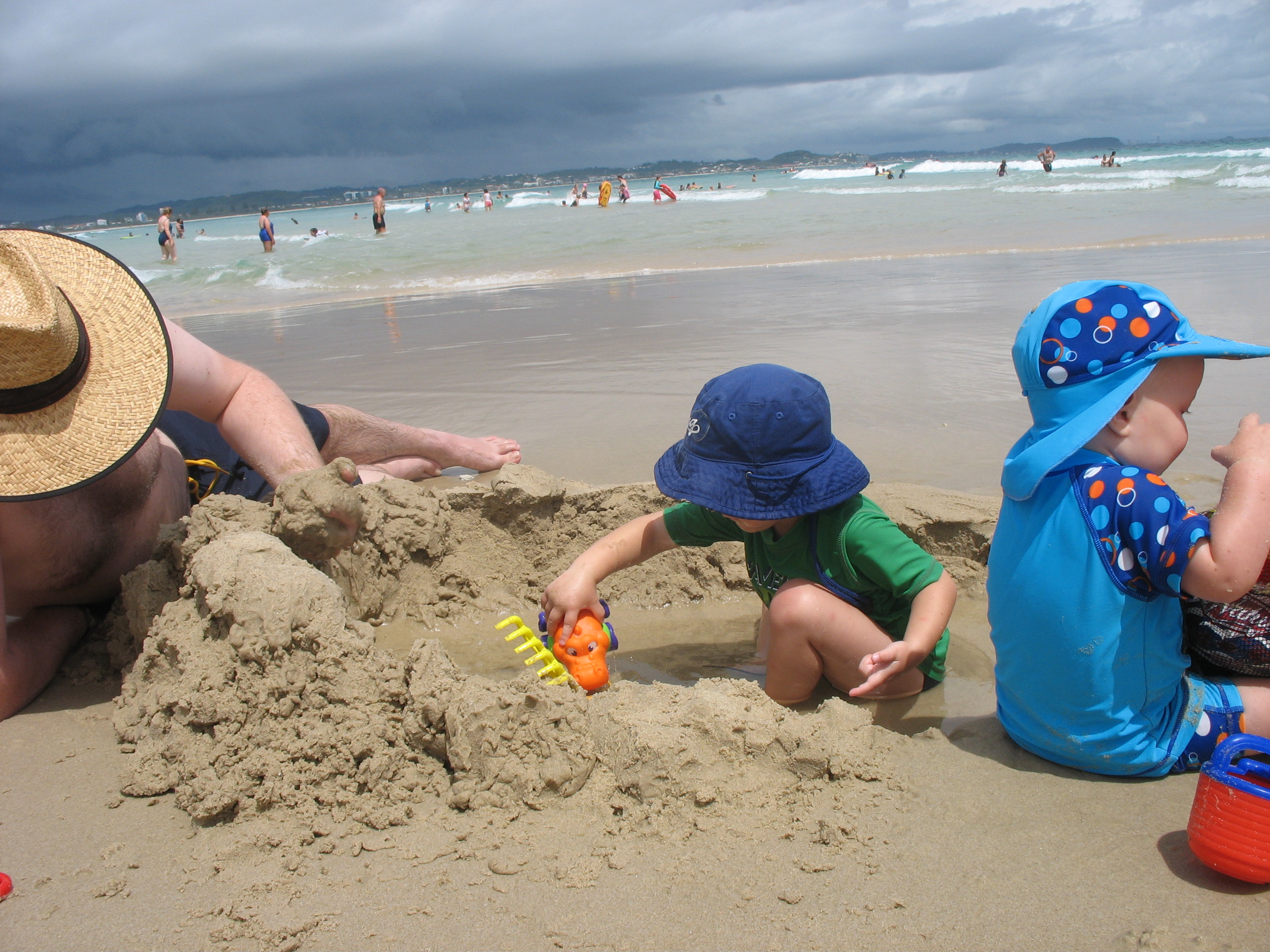
Now that we have all gotten a bit older, Rainbow Bay has become a place that my nephews now love and look forward to going to every year.  They are experiencing the caravan holiday with their grandparents (my parents) just like I did and I envy them that they have years ahead of them to discover the delights of this haven.

“Let’s dig a hole Uncle Steve”

Rainbow Bay has played such a big part in my life, it will always be one of my favourite places.

I love my country and I will sing our national anthem: why won’t you?

“Australian’s all let us rejoice, for we are young and free;”

For readers that are unaware, those are words that start the national anthem of Australia. Much is made by many about the wording of a national anthem or how it is performed. A rendition of our national anthem at the recent State of Origin rugby league match in Melbourne by a young actress playing “Annie” in the musical of the same name set social media networks alight with, in the main, condemnation of the Australian Rugby League’s choice of singer.

I have been heard to regularly lament the inappropriateness of those chosen to sing our national anthem at sport and other events of note. My frustration in that context is the fact that often the singer chosen seems to think they need to make the melody sound like one of their songs. Whilst this is something I dislike, it is not the subject of this blog. What I did want to mention however was a worrying lack of respect for our national anthem that seems to regularly arise at events I attend.

This lack of respect reached its epoch for me on Saturday night when I attended the Australia v Wales rugby union test match at Lang Park (regular followers on twitter will know that I decline to refer to the hallowed turf by its corporate moniker). As is usual for me I got to the ground early, was well settled in my seat and had already struck up a conversation with some of the fans around me in anticipation of the game ahead.

All too soon it was time for the players to run onto the ground and the national anthems. This is where my enjoyment of the night ratcheted down a notch. Upon hearing the announcement “Would you all please be upstanding for the national anthems of Wales and Australia”, an attendee sitting behind me was heard to retort “there is no way I am standing up for any stupid #$#$%# anthem”. The bloke behind me was lucky that the music had started because I was incensed. How dare he be so rude? Fortuitously, the two friends that he had attended the game with and his girl friend all castigated this individual during the break between anthems and he did stand up for the Australian national anthem.

This frankly is not an isolated incident. It seems that every time I attend an event at which the anthem is to be sung there is a melancholy that surrounds its singing. If it is not failing to stand for the anthem it is not removing ones hat when the anthem is sung or talking to your mates during the anthem.

How did we get to a point where it would seem that the singing of a song that celebrates our country is chore for many that is not respected?

The national anthem of any country is, or ought be, a celebration of its people, the country and its identity. This issue of respect for the anthem having bounced around in my head for a while, I was left to ponder what the younger generations of Australians (or of any nationality) are taught about their national anthem.

I went through school during a time when in grade 1 we learnt the words of the national anthem and at every school assembly (every week) we sung the anthem (along with God Save the Queen before 1986). The anthem was a pivotal to the teaching of history in the early grades and was interwoven through our understanding of our nation identity. Is it the same now?

Ultimately, I just don’t understand the mindset that leads one to not want to celebrate the identity of their country. I love my country and I will always sing the national anthem loudly and proudly.

The question to leave you with is: will you?

Shumpty’s Favourite Places: Washington

The genesis of this blog, as early readers will recall was my recent trip to New Zealand.  Whilst I would not say I am a worldly traveller I have been lucky enough over the years to experience and photograph some places that have had a massive influence on my life.

On Thursday’s for the next period I will be writing a series of blogs called “Shumpty’s Favourite Places” in which I will write about places that I have loved visiting or that have been important to me (or both) over the years.  In starting this series there is not better place to start than Washington.

I wish I could visit Washington every time I travel somewhere such is the excellent time I had there some 16 months ago.

I know I am a nerd but the history of the place just screams out to be enjoyed and celebrated.  The monuments are awe inspiring and yet I found them also to be solemn places it which it was apposite to reflect on not only the effect that the parties celebrated in the monuments have had on the world that we live in but also on the awe with which our American cousins lionise their former leaders.

My favourite monument is the Lincoln Memorial.  Of course I had seen it on TV and in movies and, as is my usual style, I had done some research before I arrived there but the thing that struck me was just the size of the memorial.  It is a massive footprint and is cavernous inside whilst being imposing outside.

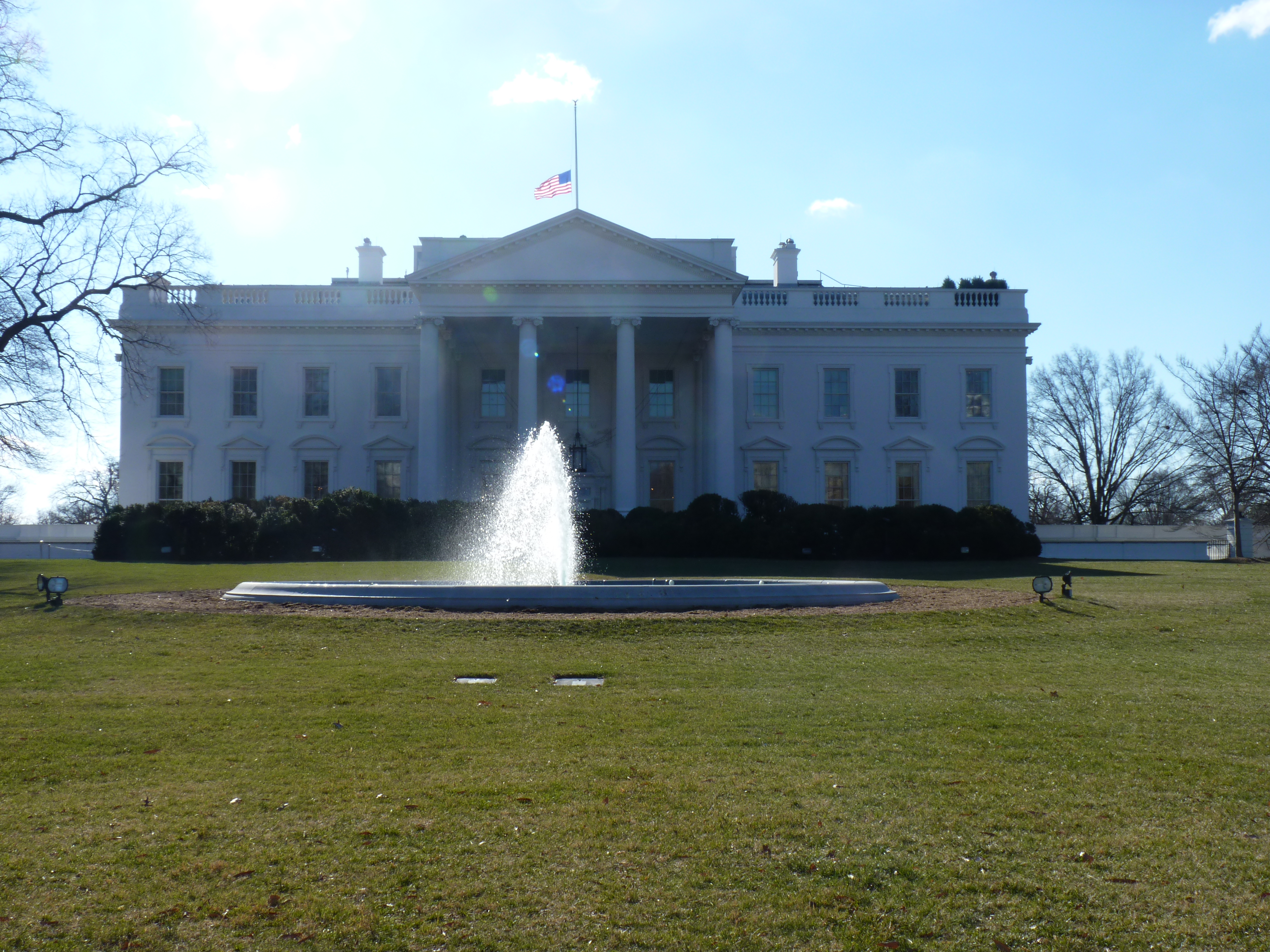
Any trip to Washington is not complete without a visit to the White House.  Converse to the Lincoln Memorial I was shocked a little at the lack of size of the place.  Compared again to what I had seen and my perception it struck me as a diminutive structure compared to the ornate and behemoth like buildings that surround it.

I saw a great many of wonderful things in Washington and those who know me will know that there was no way, for example, that I could resist going to the Supreme Court of the United States.  For me, this was law nerd heaven which only was heightened when I was able to watch an argument session in two cases that were before the Court on the day I was there.  I have been fortunate in my time to argue applications before the Supreme Courts of Queensland and New South Wales and the Federal Court of Australia but all of that paled into insignificance with the chill I got up my spine when I heard Chief Justice Roberts call the first case of the day.

Having waxed lyrical about my visit to the Court, you will probably be surprised that it was actually not the highlight of my trip.  That slot is reserved for the four of eleven (in Washington) Smithsonian Institute museums I visited during my stay.  Most particularly I will maintain till the day that I die that the best thing I saw in Washington was the National Air and Space Museum.  I loved it so much I went back for a second look.  From the Wright Flyer, through aviation using the World Wars into the exploration of Space it feels like the sum total of aviation history is all in one place.  It is hard to pick out any particular exhibit that I favoured over the rest: they all were just so good.  I really could have spent at least another day in just this one museum to make sure I did not miss anything.

I would happily go back to Washington again and I would love to live there some day.  As a naive traveller immensely out of his depth in the early days of my first real overseas trip, I found Washington an easy place to get around and the subway the best way to get around it. I have no doubt my next “big” overseas trip will include a Washington component, if only so I can tick a few more of the Smithsonian Institute’s museums of my list of places to see.

I leave you with an image of Washington that to this day is tattooed on my brain.  I took this photo on dusk in the National Mall: the modern day represented by the cars and the history of the Washington Memorial is just the right mix of the day to day hustle and bustle of America’s capital and its history to show the true essence this great city.  This is the image of Washington I will always remember.